The Night Scroll:
Last night, I was on my usual nightly hunt for something to watch, a ritual more about survival than leisure at this point. I checked my regular shows for new episodes, but couldn’t focus. Tried rewatching old ones, but nothing would get me out of my head. Finding entertainment before sleep has become more than a habit; it’s a nervous system regulation method, a way to fend off the possibility of nightmares if I go to bed without something soothing my brain. I know, it’s problematic.
In one last desperate attempt, I turned to movies. I knew I shouldn’t, it was already 11 p.m., but I believed my brain was craving a story with a conclusion, something with a clear end. A series would be too open-ended that night. I went on Filmin planning to watch some Wong Kar Wai, but instead stumbled upon the Oscar-winning Flow (2024). After finishing it, I had a sudden thought: I need to make a TikTok edit of this film using “Drag Path” by Twenty One Pilots. It was one of those fleeting, effeminate creative urges that vanish as quickly as they come, but the desire stuck. I didn’t actually make the edit, perfectionism and deadlines won that battle, but for the next few hours, I couldn’t stop replaying the movie in my mind. Especially the ascending scene. It left me wanting more, though I couldn’t tell why at first.
So, in the absence of editing, I went to Spotify. I found “Drag Path” and listened to it on repeat for two hours straight. The film and the song fused in my head into a single emotional loop. I kept wondering: Why do I feel the need to elaborate on this? If I couldn’t make an edit, and film reviews have never quite felt like my truth, what could I do with this deep need to do more with a film than just consume it? This post is an attempt to trace that feeling. It’s not a review; it’s a live report from the storm.
The Sound:
For those unfamiliar, the “Drag Path” trend began with TikTok user @am_.03_. Their content alternates between absurdly funny and deeply nostalgic edits, sometimes both at once. Their viral post used footage of a male Japanese pufferfish (fugu) creating its signature circular sand patterns to attract a mate, some of the most complex courtship displays in the animal kingdom. At first, the edit seems humorous, “who makes a cinematic montage of a fish?”, but by the end, many viewers were crying in the comments. The melancholia doesn’t come from the fish’s artistry, but from the song.
Can you, can you, can you, can you?
A drag path
Etched in the surface as evidence
I left there on purpose, a sad sign
Laying on the surface (yeah)
Can you find me?
I dug my heels into the gravel as evidence
For you to unravel, a drag path
Etched in the surface (yeah)
Can you find me?
Can you find me? (Can you find me?) x4
“Drag Path” operates through repetition and fragmentation, like echoes from someone trying to be found, physically, emotionally, spiritually. The narrator isn’t lost by accident; they choose to leave traces. “A drag path / etched in the surface as evidence” evokes something carved into existence, not washed away. It’s not a cry for help but a quiet performance of pain, leaving signs instead of confessions.
“I dug my heels into the gravel as evidence / for you to unravel” expands the metaphor. The use of “unravel” implies that the act of finding them will involve effort, patience, even tenderness. The song becomes a paradox of longing: the desire to be seen paired with the fear of being fully exposed. Leaving evidence becomes the only way to say, I was here.
Twenty One Pilots often return to themes of isolation and existential anxiety, and “Drag Path” continues that lineage, a deep cry for connection disguised as detachment.
In the TikTok context, the song takes on a new dimension. The male pufferfish literally creates art as evidence of his existence, a drag path in the sand to be noticed, loved, chosen. Its circular nest becomes a visual manifestation of the song’s question: Can you find me?
And yet, “Drag Path” has evolved beyond the fugu. It’s become a collective shorthand for loss, memory, and impermanence. From Interstellar to Laika the Space Dog, The Lovely Bones (a war crime of sadness, truly), and even edits of baby turtles racing toward the sea, the song now accompanies everything that disappears or barely survives.
Maybe that’s what keeps people returning to it: the quiet insistence that even what vanishes leaves a trace. The fugu’s circles, the turtle tracks, they’re all proof of something fleeting but deeply felt. Whether born from the instinct to mate or to survive, both are the same act of hope. The hope of being found, loved, or simply, of being alive.
And this was the emotion that summoned an edit of Flow to this song.
Flow (2024)
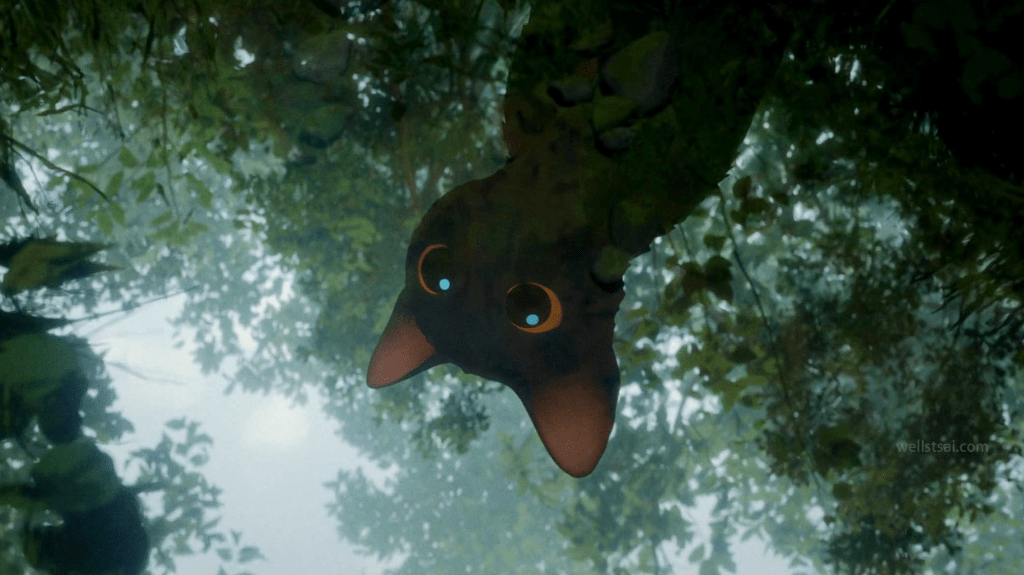
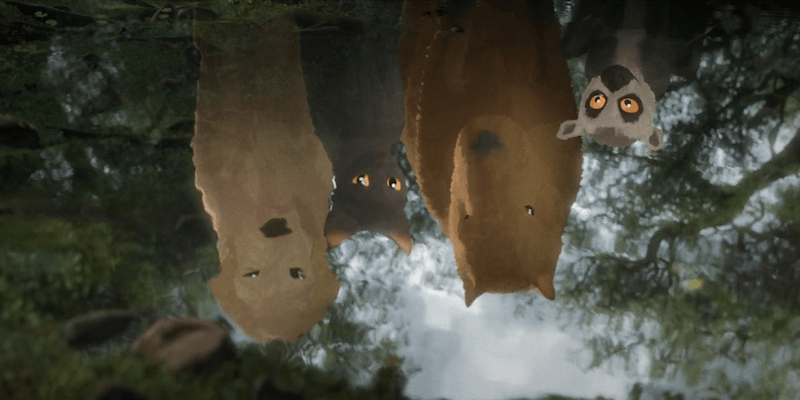
Flow (2024), directed by Gints Zilbalodis, is a dialogue-free animated film that follows a cat who survives a flood that destroys its world. Stranded on a makeshift ark with other animals, a dog, a bird, a lemur, and a goat, the cat must learn to coexist and navigate the new, submerged landscape. What begins as a simple story of survival gradually becomes one of quiet companionship and interdependence. Flow transforms a minimalist premise into a meditation on loneliness, adaptation, and the fragile harmony between living beings.
“Can you find me?” becomes a way to read the film, how each animal, lost in the same disaster, becomes part of a found family simply because they found each other.
Cats have always been seen as independent creatures, wary of the unknown. Our black cat protagonist becomes a clever symbol of isolation and self-reliance, but also of the need for community. Her journey mirrors that of someone realising they don’t have to suffer alone, that found family is possible, and survival is easier when shared. (Yes, I have unanimously decided she is a girl)
Spoilers: The bird represents loss and the vulnerability of connection, how standing for disadvantaged groups deemed “enemies” often leads to rejection or abandonment from our “community”. In this case, the bird doesn’t make it to the end with the others. Whether through exhaustion or grief, it’s the only member of the family that doesn’t survive. For the cat, the bird was both guide and caregiver. The ascending scene to metaphorically express the death was one of the most beautiful animated sequences I’ve seen since Your Name (2016).
Without giving too much away, the film repeats its trauma to show growth. There are two floods: the first catches the cat off guard and forces her to survive alone. She gets the chance to board a raft with dogs that had previously been hostile, but she hesitates and walks away, ironically, she will be the one rescuing them later. One of the dogs symbolises those who, despite being surrounded by cruelty, still choose empathy when given the chance.
The second flood comes at the end. At first, the cat repeats her old pattern, running as soon as she recognises the signs. But she stops when she sees the whale that once saved her, now dying as the water receded. Her friends find her as she embraces the whale, and together they look down at their reflections, not just hers this time, but all of theirs, side by side. They lie together on the ground near the whale. In a darker reading, they may be resigning to their fate, but at least they are together in it.
Found meaning and found family…
“The birth of the reader must be at the cost of the death of the author.”
– Roland Barthes, The Death of the Author (1967)
Objective interpretations of art may exist, but art was never meant to live only in objectivity. It’s not just about correctly identifying what the screenwriter or director wanted to say, it’s about what the work awakens in us. Art is meant to be felt. It meets us where we are, asking why we feel the way we do.
Flow embraced my deeper frame of mind before I could even articulate it myself. It mirrored my own preoccupations with loneliness, connection, and the quiet hope of being found.
Found family is a recurring theme in my writing, and it’s no coincidence. Can you find me? is a question I ask to the friends, partners, mentors, or carers I haven’t met yet, those who might one day remind me that my life, too, is a drag path. That I’m leaving traces someone will follow. That before the wind comes to erase them, someone will find me. That even if life is fleeting, it can still be rich, through love, through connection, through communion.
bell hooks once wrote,
“Rarely, if ever, are any of us healed in isolation. Healing is an act of communion.” (All About Love, 2000)
Her words remind me that the act of seeking, of reaching across time and distance for those who will know us, love us, and hold us, is itself a form of healing. Found family isn’t just a theme; it’s a way of naming hope. Hope that even in our most solitary moments, someone is out there tracing our same paths, walking toward us through the dust of their own becoming.
What film or song has made you feel found lately?
References
Barthes, R. (1967) The Death of the Author. Aspen, no. 5–6.
hooks, b. (2000) All About Love: New Visions. New York: William Morrow.
 BISILA