
Nostalgia is a longing for a past that no longer exists, or, in some cases, a past that may never have truly existed. A common feature in the renaissance of past media across entertainment industries is its significant difference from the original source material. Often, it is a recreation, a remix, or even a reinterpretation of memories and aesthetics. In this post, I want to explore how the resurgence of older styles and trends in gaming and wider culture frequently blurs the line between what actually existed and what we imagine it to be. From Y2K fashion to 8-bit visuals, the past is rarely revived in its pure form, it is reshaped, remixed, and reimagined for a new audience.
The Y2K trend, while often linked to the revival of 90s fashion, actually incorporates many characteristics more closely associated with early 2000s styles. Similarly, 8-bit aesthetics have been tied to this trend. In reality, the Y2K trend has become a broad umbrella term used by Gen Z to describe a mix of older styles they have adopted and adapted. Rather than a faithful revival of any one era, it’s more accurately described as a mashup of various characteristics from different decades, rather than a pure renaissance of any single one.
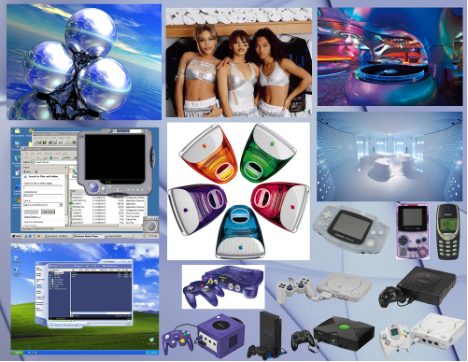

Music genres have evolved alongside modern trends of genre blending, meaning that songs inspired by 80s music don’t simply replicate the sound of the era but offer a 2023 interpretation that often incorporates multiple genres. For example, “Nostalgia” by Vic Mirallas features chiptune influences but also integrates bachata and R&B elements. Similarly, most synthwave tracks include other genres, and the drum & bass revival heavily relies on mixing with contemporary R&B.
This use of nostalgic elements in modern media is marked by the addition of new influences and the deliberate omission of less appealing aspects of the past. For instance, new arcade spaces no longer feature bulky CRT monitors and tangled wires, as such aesthetics are outdated and unappealing to younger generations.
Some revivals differ so greatly from their origins because much of the current audience lacks firsthand experience of those eras. Younger gamers who never played the original Super Mario Bros. nonetheless report a strong sense of “historical nostalgia” (Bowman & Wulf, 2023). This phenomenon arises from collective memory shaped by cultural industries, films, journalism, and other media, that influence how society remembers the past.
Even those who lived through these times may fill gaps in their memories with contemporary media representations. Just as human memory is imperfect, games themselves cannot preserve the past intact. Coding, original game data, and high scores have been lost, making it impossible to fully recreate the experience of first-generation gaming. The physical spaces, players, and circumstances have all changed, meaning the experience can never be exactly replicated.
The idiosyncratic nature of nostalgia is especially important in gaming. Taylor (2008) discusses the “golden age” of gaming and how labeling any era as the best is often shaped by nostalgic bias. The retro gaming trend reflects the maturation of the first generation of players who grew up with those early games.
While debates about the golden age continue, nostalgia remains highly subjective: older gamers long for the arcade era of challenging, seemingly impossible games, while Gen Z adults may feel nostalgic for late 2010s experiences, such as playing Minecraft with virtual friends while listening to Gymnopédie No. 1.
Concluding, nostalgia has always been a part of entertainment, but in recent times, especially amid the pandemic-driven pessimism about the future, both older and younger generations have turned to past decades in search of comfort. Minecraft remains an active game, and for Gen Z, nostalgia is less about longing for a physical or digital place they can no longer access, and more about the emotions and era connected to the game.
Entering adulthood means losing the time and freedom to play and enjoy gaming as freely as they once did. This is why nostalgia matters in gaming: it offers an escape to a place we long to be. Due to gaming’s repetitive, immersive, and preservative qualities, players can have experiences closer to those they once had, or wished they had, compared to other media forms.
 BISILA