
“Who would have thought, given the 1990’s imagining of a future filled with technology, that the beginning of the new century would in fact be marked by an increase in expressions of nostalgia?” (Macmillan, 2014).
The last decade in the entertainment industry has been defined by a renaissance of older aesthetics. In this essay, I will discuss this renaissance with regard to the gaming industry, exploring why nostalgia has become a highly consumed commodity for both companies and customers, and its importance within the industry. Over the next three posts, I want to explore this phenomenon from different angles, diving into what nostalgia really means, how it has influenced the gaming industry, and why it continues to hold such a sentimental place in our hearts. These reflections are as much about the games themselves as they are about the memories we carry while playing them, discussing:
- The meaning of nostalgia.
- The new wave of nostalgia in the entertainment industry.
- Commodification of nostalgia in the video game industry (including retro gaming, chiptunes, and postmodernism).
- Cross-media influences in gaming.
- The sentimental importance of gaming and nostalgia.
Nostalgia derives from the Greek words nostos (return home) and algos (pain). Originally, during the 17th century, it was defined as a medical condition characterized by “extreme homesickness” along with symptoms such as despondency, melancholia, and even suicidal attempts (Davis, 1977, p. 414). In modern terms, the Oxford Dictionary defines nostalgia as “a sentimental longing or wistful affection for a period in the past.”
Wulf (2018) explores how nostalgia activates in our brain and distinguishes two types: external sensory stimuli; such as music, smells, tastes, or objects that remind us of past scenes or characters; and internal emotional or psychological discomfort, which involves feelings of loss and may function as a coping mechanism by dreaming of a better time.
Initially described as a spatial displacement issue (Badis, 1977, p. 414), nostalgia was the result of physical distance from one’s home. However, with the rise of popular culture, nostalgia has evolved into a spatiotemporal emotion, rooted not only in place but also in time. The immersive nature of modern media consumption perfectly primes individuals for emotional investment in future nostalgia.
Recycling the past has become a regular practice in popular media, but the current wave is particularly characterized by retrospection focused on media from the late 20th century, especially the 1980s. Popular shows like Stranger Things and Paper Girls have reignited interest not only in that era’s aesthetics but also its social and entertainment contexts. For example, Kate Bush’s 1985 song “Running Up That Hill” recharted after being featured in the fourth season of Stranger Things.
Other examples include:
- The revival of music genres like disco and house, as seen in Beyoncé’s album Renaissance, inspired by black queer music of the 1980s.
- Garage and drum & bass experiencing a resurgence on TikTok through artists like PinkPantheress and TakeVan, now influencing K-pop through groups like NewJeans. These genres, though historically consistent in the UK, have faded and resurged globally.
- The synthwave-inspired renaissance in pop music, marked by multiple recent number one hits such as “Blinding Lights” (The Weeknd), “As It Was” (Harry Styles), “Overpass Graffiti” (Ed Sheeran), and “STAY” (The Kid LAROI).
- The City Pop revival, with older tracks like “Stay With Me” by Miki Matsubara regaining popularity, and new artists like YUKIKA attracting attention.
- The emergence of 20th-century song sampling in modern tracks, including “After Like” (IVE), “MONACO” (Bad Bunny), and “Baby Don’t Hurt Me” (David Guetta).
- The resurgence of Y2K trends in fashion and design.
Although this wave dates back to around 2016, researchers observed a “nostalgia bump” during the early COVID-19 pandemic, as people sought comfort in media reminiscent of the “good old days” (Gammon & Ramshaw, 2021), which, for most adults, meant the last decades of the 20th century. Coincidentally, this period also saw the rise of a new cultural industry: gaming. In 1962, three students at the Massachusetts Institute of Technology, Stephen R., J. Martina, and Wayne Witanen, developed what would become the first video game: Spacewar!.
However, commercial success in gaming only arrived with the 1972 arcade release of Pong by Atari Inc. That same year, the first commercial home video game system, the Magnavox Odyssey, was launched. The overwhelming popularity of Pong led to many replicas flooding the market, causing the first video game industry crash in 1977. The crisis was averted with Namco’s 1980 release of Pac-Man, which ushered in a new era characterized by the emergence of home computers and game brands such as the Commodore 64 (1982) and, most notably, Nintendo. Nintendo’s release of Super Mario Bros in 1985 marked a milestone.
Since then, arcade gaming has declined as home computers and consoles have grown both technologically and culturally. By 2023, gaming is no longer a niche interest; it boasts a 60-year history and is currently in its eighth generation. Video games have “become their own objects of nostalgia” (Burnham, 2016) as the first generation of players have grown into developers or lifelong gamers.
The average player is in their 30s, making gaming a unique context for studying nostalgia because it carries associations with childhood, technology, and rapid technological change (Taylor, 2008). Moreover, video games offer experiences of remembering that are both personal and cultural, they act as public records of events and objects, sometimes serving as mnemonic or memorial devices (Taylor, 2008). In this way, games function as time machines, allowing players to return to the “home” they no longer inhabit.
It is important to distinguish between two types of nostalgia in media:
Media nostalgia refers to the nostalgia experienced while consuming the very same content and the associated emotions tied to the inability to experience it again as before.
Mediated nostalgia refers to when content triggers memories related to a certain past.
To study how nostalgia is commodified in the gaming industry, we can divide strategies into two categories: using the game’s own history as nostalgia, or using past historical eras within the game to evoke nostalgia. Sloan (2015) discusses Far Cry 3 and Gone Home as examples of games that create nostalgia through the aesthetics of specific eras.
Both rely on cross-media influences and simulation. Far Cry 3 is a first-person shooter set in a post-apocalyptic 2007 but heavily inspired by 1980s science fiction films, visible in its music and visual style. Gone Homedraws on Riot Grrrl music and 1990s television and consumer culture. Similarly, Bowman & Wulf (2023) examine how non-diegetic music enhances nostalgia in games, focusing on the Fallout franchise’s use of jazz and swing to match its period setting.
Immersion in a game relies heavily on well-researched world-building, including music choices. Regarding the use of their own history as nostalgia, the gaming industry emphasizes two main aspects: retro gaming as the collection of old games and consoles, and retro gaming as an aesthetic style (Wulf, 2018). Newman (2013) expands on the concept of playing older games as part of retro gaming culture.
As Makai (2008) observed, old PC games are being revived and sold on websites like GOG.com (Good Old Games) and Steam for collectors. Some companies recreate their classic consoles with updated hardware, such as the Atari 8 Flashback Deluxe or Nintendo’s NES Classic Edition.
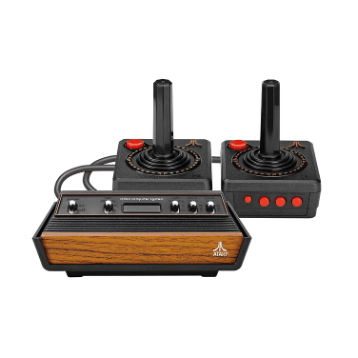
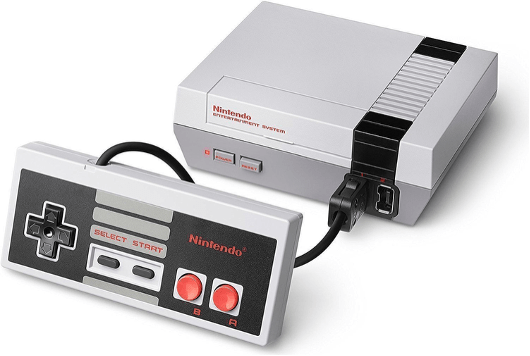
One of the aspects of nostalgia derived from older games is the level of difficulty, games such as Donkey Kong where infamous for their difficulty and the time and effort put into leveling in the game are hard to find in contemporary AAA games.
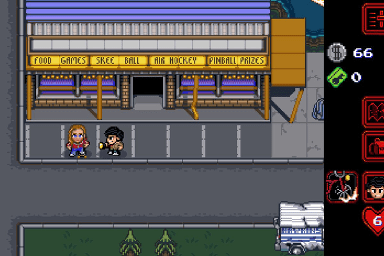
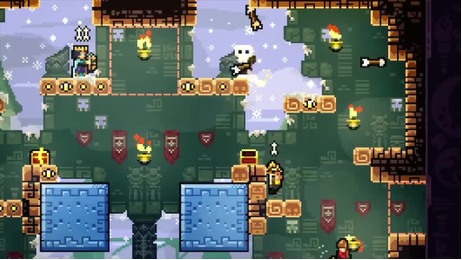
Super Meat Boy is a contemporary game that tried to emulate the difficulty that older games had (Sloan, 2015). There are also new games inspired by the aesthetic of older games, TowerFall Ascension was inspired by Super Mario Broas, The Binding of Isaac and Evoland are games inspired by the classic Legend of Zelda and Shovel Night is inspired by NES games. The new Stranger Things mobile game, Rogue legacy, the binding of Isaac or shovel Knight are games also inspired by the aesthetic of retro gaming.
click: PART 2
REFERENCING:
-MACMILLAN, P. (2014). Media and Nostalgia: Yearning for the Past, Present and Future. Available from: https://www.google.co.uk/books [Accessed on 14th November 2023]
-Makai, P.K. (2018). Video Games as Objects and Vehicles of Nostalgia. Humanities, 7, 123. Available from: https://doi.org/10.3390/h7040123 [Accessed on 15th November 2023]
-Taylor, L. N., & Whalen, Z. (2008). Playing the Past: An Introduction. In L. N. Taylor & Z. Whalen (Eds.), Playing the Past: History and Nostalgia in Video Games (pp. 1–16). Vanderbilt University Press. Available from: https://doi.org/10.2307/j.ctv16759mn.4 [Accessed on 14th November 2023]
-Wulf, T. et al. (2018). Video Games as Time Machines: Video Game Nostalgia and the Success of Retro Gaming. Media and Communication (ISSN: 2183–2439) 2018, Volume 6, Issue 2, Pages 60–68. Available from: DOI: 10.17645/mac.v6i2.1317 [Accessed on 16th November 2023]
-Bowman N. D. & Wulf, T., (2023) Nostalgia in video games,Current Opinion in Psychology, Volume 49. Available from: https://doi.org/10.1016/j.copsyc.2022.101544. [Accessed on 15th November 2023]
– Newman, J. (2013). Videogames, Taylor & Francis Group. ProQuest Ebook Central, Available from: https://ebookcentral.proquest.com/lib/dmu [Accessed on 15th November 2023]
-Ivory, J.D. (2015) A brief history of video games. The Video Game Debate: Unravelling the Physical, Social, and Psychological Effects of Video Games. United States: Taylor & Francis. Available from: https://www.google.co.uk/books [Accessed on 15th November 2023]
– Oxford English Dictionary. (n.d.) Oxford: Oxford University. [Online] Available from: https://www.oed.com/dictionary/nostalgia [Accessed on 15th November 2023]
-Sloan, R. J. S. (2015). Videogames as Remediated Memories: Commodified Nostalgia and Hyperreality in Far Cry 3: Blood Dragon and Gone Home. Games and Culture, 10(6), 525-550. Available from: https://doi.org/10.1177/1555412014565641 [Accessed on 12th November 2023]
-Kevin, D. & Diaz J. (2009). Endless loop: A brief history of chiptunes. In “Games as Transformative Works,” edited by Rebecca Carlson, special issue, Transformative Works and Cultures, no. 2. Available from: https://doi.org/10.3983/twc.2009.096 [Accessed on 13th November 2023]
– Kordic, A. (2015). What exactly is pixel art and how did it come back to life? Widewalls, November 7th, Available from: https://www.widewalls.ch/magazine/pixel-art [Accessed: 16/10/2023]
-Gammon S. & Ramshaw G. (2021) Distancing from the present: Nostalgia and leisure in lockdown. Leisure Sciences, 43(1-2), 131-137. DOI: 10.1080/01490400.2020.1773993 [Accessed on 14th November 2023]
-Burnham, C. (2016). Fredric Jameson and the Wolf of Wall Street; New York: Bloomsbury Academic. Available online: https://books.google.hu/books [Accessed on 16th November 2023]
-Davis F. (1977). Nostalgia, identity and the current nostalgia wave. Journal of Popular Culture, 11, 414–424.
-Michel, P. St. (2016) The New Faces of Japanese Chiptune. Bandcamp, November 16. Available from: https://daily.bandcamp.com/scene-report/japanese-chiptune-list [Accessed: 16/10/2023]
Photographer/Creator Last name, Initial(s). (Year) Title of image/photograph. Available at: URL (Accessed Day Month Year).
 BISILA