Alice’s world has spilled far beyond the page and Disney’s screen, making its way into pop culture in some of the most visually striking forms. Music videos in particular love Wonderland. Artists borrow tea parties, rabbit holes, and shifting identities to stage stories of transformation, chaos, or rebellion. These dreamlike symbols become tools to express everything from emotional turmoil to creative liberation.
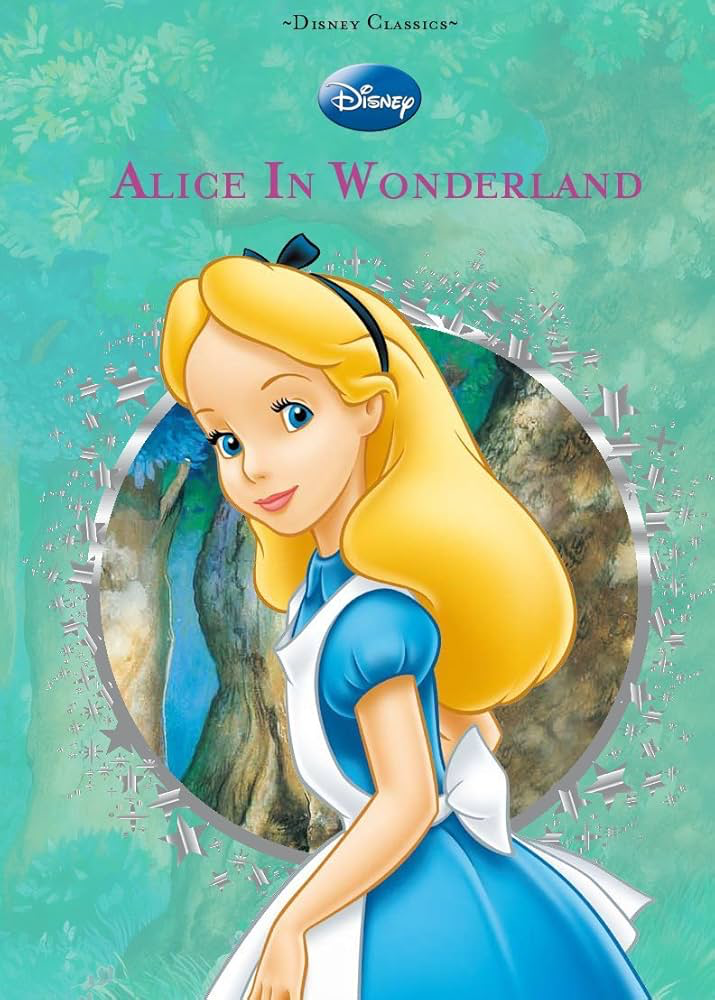
Disney’s 1951 film plays a major role in shaping what we now think of as “Alice imagery.” The blue dress, blonde hair, white rabbit, and even the tea party visuals do not come directly from Carroll’s text but from Disney’s adaptation, which packaged Alice into a cohesive, marketable character. As Vizcaíno-Verdú, Aguaded, and Contreras-Pulido (2021) note, YouTube and other platforms have turned Disney’s version of Alice into a global icon (p. 7). The blue dress, blonde hair, and white rabbit have become instantly recognizable symbols, which are, in fact, a Disney add to the culture, and not a creation of . Even when artists twist them into darker or stranger versions, the audience knows they are stepping into Wonderland.
A striking example comes from Japanese artist Aimer’s “I Beg You” (2019). I need to digress to express my love for Aimer as a singer, back to it. The video reimagines Wonderland as a fractured, emotional space. The protagonist wears Alice-like clothing while navigating dreamlike, disjointed imagery that mirrors Carroll’s chaotic storytelling. As Masafumi Monden (2022) explains, this use of Wonderland reflects emotional trauma and shifting identity, showing how Carroll’s themes adapt easily to darker, introspective stories (p. 256).
Western pop music offers its own takes. Gwen Stefani’s “What You Waiting For?” (2004) drops her straight into a Wonderland-inspired world, complete with tea parties, oversized props, and theatrical fashion. Stefani’s bold, avant-garde outfits, like a metallic bodysuit, turn Wonderland into a performance of creativity and confusion. According to Rebecca Hutton and Emma Whatman (2018), fairy-tale imagery in videos like this allows pop stars to experiment with identity while delivering visually dramatic narratives (p. 550).
Melanie Martinez’s “Mad Hatter” (2017) pushes further into Wonderland’s darker edge. She embodies a twisted version of Alice, trapped in a dollhouse-like set filled with eerie props and distorted proportions. The unsettling visuals echo the original story’s fluid logic, where nothing is stable and innocence collides with madness. The lyrics, “You think I’m crazy, you think I’m gone,” mirror Alice’s own confusion about selfhood, linking Carroll’s characters with Martinez’s exploration of instability and trauma.
Nicki Minaj also plays with Wonderland in “Pills N Potions” (2014). She embodies multiple characters, including the White Rabbit and the Red Queen, surrounded by metallic tears, floating heads, and surreal landscapes. At one point, she dresses as a rabbit, marking her descent into an altered emotional state. Even the title itself nods to Carroll’s story, where pills and potions trigger Alice’s constant changes in size, and have been speculated to represent drugs or substances. Here, Wonderland becomes a metaphor for escape and transformation.
CLICK:
 BISILA